
English| EUR
Suggested for you
More currencies
Choose a language
Most visitors to Phang Nga Bay's bioluminescent plankton depart from Phuket, roughly 90 kilometers northwest across provincial borders. The journey requires coordinated timing: tours leave Phuket in late afternoon to reach the bay's sheltered coves after dark, when conditions allow the plankton's glow to become visible.
Quick answer
Phang nga bay bioluminescent plankton from phuket requires departure between 15:00 and 16:30 to reach Ao Phang Nga National Park by the optimal 18:00–20:00 viewing window. Most operators arrange hotel pickup across Phuket's west coast zones, with travel time averaging 90 to 120 minutes depending on your accommodation's location and the tour's launch point within the bay.
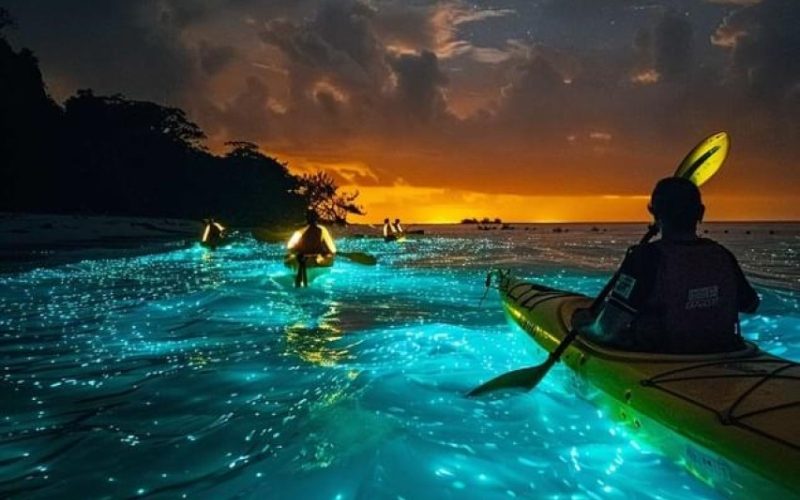
The bioluminescent plankton phenomenon in Phang Nga Bay occurs only after full darkness, a constraint that shapes every aspect of departure logistics from Phuket. Tours cannot begin at the bay itself until approximately 18:00, which means visitors staying in Patong, Kata, or Kamala face a precisely timed sequence: hotel pickup in mid-afternoon, overland transfer through Phang Nga Province, arrival at the pier, and kayak deployment into the mangrove channels where Noctiluca scintillans concentrate along tidal margins. The phang nga bay bioluminescent plankton from phuket route follows Highway 402 northeast from the island, crossing Sarasin Bridge onto the mainland and continuing inland past rural districts before reaching the national park's eastern boundary. Transfer vehicles typically collect guests in reverse geographic order, starting with the northernmost hotels in Mai Khao and Nai Yang around 15:00, then working south through Bangtao and Surin, and finishing in Patong or Karon by 16:00. The sequence ensures all participants reach the launch pier simultaneously, a necessity for group kayaking under timed darkness conditions. Phuket-based visitors must confirm two details during booking: exact pickup location and whether the 300-baht national park entrance fee is bundled or payable separately upon arrival. Most tour operators include the fee in their quoted rate, but budget packages occasionally list it as an additional cost, creating confusion at the pier when rangers collect payment before kayaks enter the water. The fee applies per person regardless of age, a regulatory requirement within Ao Phang Nga National Park that operators cannot waive. The return journey reverses the route, typically reaching Phuket hotels between 22:00 and 23:30 depending on the tour's end time and your accommodation's location. Visitors should plan no commitments for the evening of the tour, as delays from weather, tidal conditions, or group pacing can extend the schedule. The phang nga bay bioluminescent plankton from phuket experience demands flexibility, particularly during monsoon transition months when sudden squalls occasionally force abbreviated viewing windows or rescheduled departures.
“Tours cannot begin at the bay until approximately 18:00, which means visitors face a precisely timed sequence starting in mid-afternoon.”
The best arrival window is 18:00–20:00, as total darkness is required to observe the bioluminescent plankton. Calm evening waters further improve visibility of this natural phenomenon.
Consistent clear skies, 28–32°C
Optimal visibility due to lower rainfall and stable sea conditions.
Variable rainfall, 25–30°C
Increased chance of rain, though bioluminescence remains visible during clear intervals.
—
Arriving between 18:00 and 20:00 ensures the necessary darkness to see the plankton.
Verdict: The best time to visit is during the dry season from November to April, arriving between 18:00 and 20:00.
Ao Phang Nga National Park is located in the Phang Nga Province, accessible from Phuket by traveling north across the Sarasin Bridge. Independent travel to the bay requires careful night navigation, as reaching the departure points for bioluminescent viewing areas involves driving on regional roads that are often unlit.
Route 402 north to Route 4144
Route 402 north to Phang Nga departure points
Private charter from Phuket marinas to Ao Phang Nga
For independent travelers, ensure your vehicle is parked at an authorized pier well before your departure. Since night navigation is required, using a pre-arranged transfer or professional tour operator is recommended to manage the complex logistics of coastal access after dark.
Ao Phang Nga National Park maintains 24-hour accessibility to accommodate marine activity and logistics. While the area is open daily, bioluminescent plankton observation is restricted to nighttime hours.
Prepare these items before your evening departure from Phuket to ensure a safe and comfortable kayaking experience on the bay.
Everything you need to know about phang nga bay bioluminescent plankton from phuket
Many tours offer family-friendly options for those seeking a phang nga bay bioluminescent plankton from phuket experience, though night travel requires careful supervision of children. Please ensure your chosen excursion operator provides appropriate life jackets and safe vessel protocols.
Observing the marine glow is highly dependent on environmental conditions, and darkness is required to see bioluminescent plankton effectively. Calm waters at night significantly enhance your ability to witness these organisms.
Yes, there is a mandatory 300 THB national park fee per person. This amount is typically payable separately if it is not already included in your specific tour package.
Visitors should plan their arrival window between 18:00 and 20:00 to ensure optimal conditions. Arriving during this period provides the necessary darkness to observe the natural phenomenon.
Ao Phang Nga National Park is open from 00:00 to 23:59 every day of the week, including Monday through Sunday. This schedule ensures that visitors can access the area for late-evening nautical activities.
Yes, night excursions are the primary way to witness this natural display, as daylight makes the glow invisible. Organizing a phang nga bay bioluminescent plankton from phuket journey allows for travel during the required darkness.
When visiting Thailand to see this glowing sea life, you are looking for dinoflagellates that react to water movement. These tiny organisms create a trail of light in the wake of boats or splashing water.
While you can travel to Ao Phang Nga National Park independently, most visitors find it easier to utilize organized boat transport from Phuket. Ensure your transit plans align with the recommended arrival window for the best results.